Showing posts with label health. Show all posts

Sunday, February 27, 2011

Golden, crunchy chicken nuggets. Nutrition and sedition in the nanny-less state


Some children will eat anything. The Pintos (my two nephews) will eat chicken, in nugget, ‘tuckey’ (that is, Kentucky Fried Chicken) and grilled form. That’s about it. And frozen vegetable mix with rehydrated mash potato. And ice berg lettuce. And ice-cream, chocolate, cake, ice-cream, cheese, chips (crisps and fries), pancakes with honey and bananas. Ok, so there are probably fussier children.

Home made chicken nuggets, crumbed with the crumbs of stale bread, baked and not deep fried, served with salad and vegetables manages to satisfy their limited appetites without destroying my principles.

Although I swear they can tell the difference. And to them, homemade is simply not as good. It lacks the salt and oil of pre-prepared chicken nuggets. The bread from which I make crumbs is multigrain, sourdough, denser and not as sweet or salty as a commercial crumb mix or batter. The vegetables are not as soft. The mash potatoes never as weirdly smooth as rehydrated powder (which I have never tasted and therefore cannot know how on earth I would emulate it).

And it’s hard work. Crumbing chicken (dip in milk, dip in flour, dip in egg, dip in crumbs ...), boiling potatoes then mashing them, dicing and blanching vegetables. I do this once in a blue moon. I get why countless parents don’t. It’s because they have something else to do with those several hours. Every day.

But what I don’t get is how chicken nuggets, of all things, became the food that children eat (also frozen fish fingers, a culinary abomination I cannot fathom). There are lots of things we could serve to children that take no time and do not come highly processed and swimming is sugar, salt and fat. And yet we, as a general culture, collectively facilitate frozen nuggets and frozen vegetables (which are actually not significantly processed, being snap frozen with little added to them) and pizza and packets of chips and muesli bars and cookies.

I’ll admit I don’t know the first thing about raising children. But the “food” we, as a society, now feed and make available to children, is also the food that we are collectively consuming as adults. Pre-prepared and packaged and frozen and take away foods. Foods low in nutrients and high in calories. Foods which don’t feature adequate vegetables and fruits. Foods with added fats and sugars and salts, well beyond what we need.

Our children may well recover from the food we feed them (although the stats are not encouraging. More children are more overweight than ever before recorded. Similarly, more adults. We will die fat but not alone). But we adults (on the whole) have not really demonstrated that we know any better. That we are able or willing to eat any differently.

Governments do little to intervene. Heaven forbid ‘they’ tell ‘us’ what to eat. But when say we don’t believe in the nanny state we are effectively saying ‘let us choose to make ourselves and our children sick’. When we compound this idiocy by further criticising ‘big taxes’ – which pay for schools and education programs and public health campaigns and hospitals – we are saying ‘please also make it impossible for us to treat the consequent illnesses’. No one is to blame, we are all to blame.

We buy convenient food because it is convenient. The price we pay – in dollars and in time – is simply not commensurate to the sugar-fat payload. Of course, there are healthy, cheap, quick alternatives. Salads. Lentils. Steamed vegetables. Brown rice. Fresh fruit. Porridge. Chickpeas. But they don’t taste nearly so sweet-salty-tasty (just like heroin is so much more effective than paracetamol).

Make it from scratch. Not every time, but once or twice. Know the effort that goes into making good food. Understand the ingredients. Read the labels. Read the nutritional information. If governments and business refuse to take responsibility for our health and wellbeing, and we refuse to let them, then let’s grow up and take responsibility for ourselves.


Crunchy baked chicken nuggets with sourdough crumbs

Serves 6

1 kg chicken meat, trimmed of skin, sinew and fat. Cut into bite sized peices
½ loaf stale sourdough bread
3 cloves garlic
1 cup milk
2 eggs
1 ½ cups cornmeal (ie, semolina or polenta)

Preheat oven to 190ºc. Line two baking trays with baking paper and lightly brush with olive oil.

Cut the bread into chunks and blitz in a food processor with the garlic until finely crumbed. Season with salt and pepper and a little paprika (optional). Emply into a large bowl or plate.

Beat the eggs together in a dessert bowl, add about 2 tsbp water or milk. Set aside.

Pour the milk into a separate dessert bowl, set aside.

Place the cornmeal into a large bowl or plate.

From left to right, arrange the milk, cornmeal, egg and breadcrumbs.

Dip a chicken piece into the milk, then coat in cornmeal, then dip into the egg and then press into the bread crumbs. Place on the baking tray, and repeat.

Cook in the oven for approximately twelve minutes, turn each nugget over and cook for a further three to five minutes. They should be golden and crunchy (to test if cooked, cut one in half. It’s not rocket science).

Serve with blanched vegetables and homemade tomato sauce.

Thursday, February 17, 2011

Something light. And healthy. Crunchy Lime and Chilli Chicken Salad

Kitchen Helper, who I love*, has a well-honed and perversely indiscriminate palate. That is, an appreciation, certainly, of extremely tasty and fancy food, but also a willingness to eat just about anything. This makes experimentation, travel to weird and exotic places and my very occasional lack of effort** pretty much risk free, culinary speaking. On the other hand, Kitchen Helper is a rubbish muse. Primary contribution to meal planning? “Something light. And healthy”. Every. Single. Time.

We eat a lot of salad.

In between summer storms the weather is muggy. Of course, talking about the weather is so passé, so ordinary, so boring (a little like my muse's efforts). And yet with flash-floods and cyclones and violent and damaging storms it is impossible not to be hyperaware of the moisture in the air, the colour of the sky, the direction of the wind, flashes of lightening.

And Kitchen Helper is moping because of the weather, like a chocolate Labrador melting in the sun. It is, apparently, too hot today.

On days like this there is no need to consult (okay, on no days ever is it ever necessary to consult, given the uniformity of response). Because a salad is perfect.

But not just any salad. Oh sure, I love a good Caesar salad or salade Lyonnais or Greek salad, salty with olives and fetta. But tropical conditions call for tropical salads, sour and salty and spicy and so very, very fresh with ginger and lime zest. Bright and colourful and refreshing, just about any crisp vegetables (or fruit) that can be eaten raw can be shredded and tossed in. Snow peas. Green papaya or mango. Carrots. Celery. Just get the dressing perfectly balanced and go to town. The resulting pile is crisp and tangy and hot and pungent with stinky fish sauce and so absolutely right in 90% humidity. And light. And healthy.

* Deeply, passionately, always
** Yes, there are days when I really cannot be bothered. On those days we eat paella. I have no idea how paella became the standby dish of appathetic cookery, but it works out well, because routine as it is for me to cook now, it always tastes amazing.

Vietnamese(ish) chicken salad

Serves four

1 whole chicken, butterflied (with a sharp knife, cut chicken along backbone and open out flat)
Olive oil
Sea salt

Salad
2 medium Lebanese cucumbers, seeds removed and cut into julienne (or your nearest approximation)
2 carrots, peeled and cut into julienne
1 medium red capsicum, cut into julienne
1 small to medium kohlrabi, peeled and cut into julienne
200 gm bean shoots (about two handfuls)
5 long spring onions, cut into 7cm lengths and then strips
¼ cup unsalted roasted peanuts

Dressing
3 tbsp soy sauce
3 tbsp fish sauce
Juice and zest of 1 lime
Juice of 1 lemon
1 tbsp rice wine vinegar (or white vinegar, if you must)
1 ½ tbsp castor sugar
2 bulbs garlic, minced
1 inch ginger, crushed
1 hot red chilli, finely sliced
2 tbsp sesame oil

Preheat oven to 200ºc. Rub chicken with olive oil and sprinkle liberally with salt. Place into the oven on a tray, cook for 30-40 minutes (until juices run clear from a knife inserted into the thigh bone joint). Remove from oven and rest for 20 minutes (or do the day before, and have cold instead of just warm). If you like, you can glaze the chicken in equal parts honey and soy sauce before cooking.

When the chicken is cool enough to handle, remove the meat from the carcase and shred with your fingers into smallish strips. Remove the skin if you prefer (this makes it even lighter and healthier).

To make the dressing, whisk together all ingredients. Taste. Does it have a good flavour balance? Adjust – if too salty, add a little extra oil and vinegar, if too sweet, more vinegar and lime. Too oily? More fish sauce (go easy though). Way too spicy? A bit more sugar. The longer you leave the dressing to sit, the more the flavours will infuse and develop.

Toss chicken and all salad ingredients except peanuts through the dressing until coated.

To serve, pile portions onto a plate and scatter with roasted peanuts.

Monday, November 8, 2010

Jack and the beanstalk (warm bean salad)

Beans and peas are so ubiquitous that it can be hard to think of them as anything special. That is in fact a driving narrative force in the whole Jack and the Beanstalk story. His mum dismissed those beans and tossed them out the window. The rest is history (or fairytale). Beans, I believe are valourised by this story.* Same goes for peas, cf: The Princess and the Pea.

Beans are magic.

Broadbeans, green beans, peas and sugar-snaps, butter beans. And purple-pink speckled borlotti beans.** All freshly podded or top-and-tailed or de-stringed, according to phylum-order-family-genus-species.

Sweet and crunchy and soft and earthy, fresh legumes are one of the luxuries of spring, a verdant and humble apology for a winter’s age of dried pulses.

* Yeah, ok, arguably the beans are only vindicated by virtue of the access they provided to the golden goose or whatever was at the top of the beanstalk. The moral of the story, to my rather myopic view, is: vegetables are really, really good.
** Tragically, they lose their spots when cooked. And they must be cooked, for at least ten minutes or they might kill you. See magic. Seriously - some beans contain quanities of a lectin called phytohaemagglutinin, which can be quite harmful to humans. Cooking reduces the harmfulfulness. See http://en.wikipedia.org/wiki/Phytohaemagglutinin


Warm spring bean salad

Serves 2

300 gm (unshelled) fresh borlotti beans (you should be left with about 100 gm of shelled beans)
300 gm (unshelled) fresh broad beans (you should be left with about 100 gm of shelled beans)
200 gm (unshelled) fresh peas-in-the-pod
1 bunch asparagus, cut into 5 cm lengths
100 gm green beans, cut into 5 cm lengths (or use a mix of butter beans and green beans)
2 tbsp olive oil
½ Spanish onion, finely diced
1 garlic clove, minced
2 tbps finely chopped parsley
Celery salt (or plain sea salt)
100g Soft goats cheese or curd or a goat’s milk fetta cheese.

Shell the borlotti beans. Boil in salted water for about 15 to 20 minutes, until tender but not mushy. Drain and reserve.

Shell the broad beans. Blanch in boiling water for about two minutes. Strain and remove the pale skins to reveal the bright green beans. Set aside with the borlotti beans.

Blanch the peas and beans for about three minutes, until just cooked. Strain and set aside with the other beans.

In a large fry pan, heat the olive oil and sauté the onions and garlic on a medium heat until translucent. Add the asparagus and cook for about three minutes or until the asparagus is just cooked through (but still has a nice crunch). Add the reserved vegetables, the parsley and celery salt and toss until all the vegetable are combined and warm through.

Serve with crumbled goats cheese.

Monday, October 18, 2010

Clear tomato soup

Abundance is a big, ripe, round word, almost onomatopoeic in its application to the mounds of more -than-ready-to-eat tomatoes tumbling into the market stalls as spring heats up.*

There is nothing I do not adore about the smell of tomatoes. Sugar and acid and that strange spicy scent of the stems and leaves.

There is a stall at the market which categorises tomatoes according to a range of juxtaposed and seemingly arbitrary taxomonies. Place of origin (Murray Bridge, Bacchus Marsh), variety (Aledaide*, roma, cherry, ‘field’), method of cultivation (field, trussed, hydroponic, magic), and ripeness (ready to eat, green).
And purpose: cooking. That is, soft, falling apart, two-days-past ripe, almost mushy with splitting skins. And at $2.50 per kilo, irresistible for someone whose winter stocks of passata and chutney and tomato sauce and paste are exhausted.

Tomatoes are sexy. Ther’s no denying the call to summer present in their lush, lush redness, like pouting lips, ready for the the hottest, wettest, tomatoiest kisses. Tomatoes are ‘come hither’. They’re anybody’s, everybody’s. They’re easy.

So in an effort to pour ice onto that tomato induced libido, chill. To make summer’s good-time gal an ice-queen, she has to strip. And strip she did*.

Blended, strained, frozen until the first ice crystles start to form, this blush-tinged tomato soup is a tomato flavoured slap in the face.

Still easy though ...


* Don’t be deceived. It snowed last Saturday. It snowed. It never snows but it snowed.

** which I thought was part of the ‘place of origin’ schema, but it turns out it is a variety of tomato – more pinkish than reddish, and very flavoursome, firm fleshed.

*** Note: the tomato, not me.


Clear tomato soup


Serves 4 as a light starter, or 2 for a meal with salad and bread.

1 kilo ripe, ripe, ripe tomatoes
1 cup fresh basil leaves
2 cloved garlic, peeled
2 ripe but firm tomatoes, de-seeded and peeled, cut into small diamonds
2 tbsp small basil leaves, to serve
Salt and pepper to taste

Place the tomatoes, basil and garlic in a blender and blend until smooth. Place a muslin lined strainer over a large bowl and pour in tomato pulp.

Place in the fridge to strain over night (at least eight hours). Do not press the mixture (this can make it cloudy).

The next day, taste the tomato ‘water’. Season with salt and pepper. (note – I reserve the left over pulp and add it to passata or baked beans or casserole – nothing goes to waste!)

Place in the freezer until ice crystals start to form at the edges. (you can also serve this hot – just heat until warmed through – wait until soup is hot to season it, as hot food generally needs less seasoning than chilled food).

Spoon into bowls or glasses, top with reserved tomato diamonds and basil leaves.

Sunday, September 5, 2010

Mung beans and whole grains

I recently saw a picture in a magazine of toasted whole wheat with a slow cooked egg yolk. Something about the dark crunchiness of the wheat appealed – I could imagine it’s dense, chewy texture, subtly enhanced with the rich gooeyness of the egg yolk. It looked simple. Basic. Impossible to tell, from the picture, if it was enhanced with something extravagant like truffle oil or handpicked wild micro-herbs. No recipe, just a picture amongst many pictures.

Whole-gains seem the terrain of hippies and health nuts, the food of anaemic and fashionable vegans and ultra-fit protein obsessed gym junkies. It sounds like a diet, or an extreme life-style choice. Which immediately conjures a sense of deprivation. Dieting seems to evoke a sense of loss of more than just weight. A world without sugar and fat and carbs and sweets and treats. A world without flavour. A world of rabbit food and cardboard tasting meal-substitutes.

And in all honesty, at the end of a winter that I dealt with primarily through laziness and comfort food, a reassessment of the healthiness of what I eat is probably called for. Not ‘a diet’, not a fad or a quick fix. Just a subtle realignment, now that my hostility to the season can be set aside for another year.

But there is something about toasted unprocessed whole grains, nutty and caramel, crisp and yielding, with a taste like the smell of cooking toast, that is homey and satisfying and comforting. On close inspection, toasted grains have nothing in common with deprivation. Despite the indisputable health and environmental benefits, whole grains are an unexpected treat, and now, more than a little bit high-end. Hence their appearance in a glossy magazine devoted to the valorisation of the chef’s arts.

I could have gone out and bought some farro, the oh so cool grain of the moment, some kind of ancient and original variety of wheat. Or whole wheat kernals. Or mixed red and black quinoa with onions and garlic and spinach. But I have barley in the pantry, set aside for adding to rustic soups. And what better to match it with than mung beans, that other shared bastion of the hug-the-earth-cum-health-kick movement?

There is something so terribly retro about mung beans. Reserved for the super-health conscious and hippies, they’ve hung around in health food shops and food co-ops with an endless seventies vibe, kind of overlooked and forgotten.

With English mint and plenty of salt, this was fresh and earthy, and a little bit pretty. And ridiculously healthy.

Toasted barley and mung bean salad

Serves two

½ cup pearl barley
1 cup mixed bean shoots (ie, mung beans, pea shoots, chickpea shoots)
¼ cup fresh peas
½ cup torn mint leaves
½ cup snow pea shoots (green part only)
2 tbsp toasted pine nuts
1 tsp olive oil
1 tbsp lemon juice
Sea salt
Pepper


In a large non stick fry pan heat the barley over a medium heat, shaking the pan or stirring to prevent the barley from burning. When the barely is a deep golden colour, add two cups of water or stock and lower the heat. Simmer for about half an hour, until the barley is soft and chewy (and most of the liquid is evaporated. Strain and add to a large bowl.

Bring a small saucepan of water to the boil, add peas and cook for about 5 minutes. In the last minute of cooking, add the mixed mung beans, just to soften a little. Add to the bowl with the barley and remaining ingredients and toss to combine. Season with salt and pepper.

Tuesday, August 3, 2010

Eats roots and leaves: nose-to-tail celery and celeriac soup*

Wastefulness. At one end of the input-output spectrum we throw away millions of tonnes of perfectly edible food every year.

At the other end of the spectrum, we limit, and therefore waste, the options available as food. Our environmental impact is such that species are become extinct at an alarmingly exponential rate (they ate dodos people. And don’t even get me started on the implications of bee extinction**). In terms of food production and consumption we are also voluntarily limiting the variety of species that we chose to eat***. And even more so, we are choosing only to consume a very small part of those species that we do choose to eat.

Homo sapiens, the smart men, need to eat smarter. Nose-to-tail eating is a brilliant slogan for us carnivores. ‘Eats roots and leaves’ captures this for the herbivores among us. It’s true that not every part of every plant is edible. Some are in fact harmful. But beetroot leaves, broccoli stalks, grape vine leaves, and pumpkin seeds – all edible. Orange rind and pineapple skins make beautiful marmalade. Watermelon rind can be turned into pickles.

And pretty much every part of celery can be devoured.

Most of us are familiar with the stalks – the crunchy light green part, great with hummus or peanut butter (that may be my particular fetish ...). Wash, cut, throw away the leaves, right?

Alternatively – eat it all. Young celery leaves are lovely in salad. Older leaves can be blanched like English spinach or oven dried as crunchy snacks or even powdered for a concentrated celery flavoured dust. Even the tiny seeds are edible. As is the root.

Celeriac is a knobbly, bulbous root of a variety of celery. It has a subtle celery flavour and can be eaten raw (for example, julienned in French remoulade, a kind of mustard mayonnaise salad), roasted or fried (a little like potato, but less starchy) or steamed and pureed (try: half potato, half celeriac, significant amounts of butter, delicious).

Which all leads to soup: with a light creamy texture and a fresh celery taste, it is all the comfort of winter with all the promise of spring. Using every part of the celery plant.

* For those with a one track mind, the incorrect insertion of a comma can make all the difference. See Lyn Truss’ excellent work on gramma, Eat, Roots and Leaves

** In a nutshell, bees fertilise flowers. Fertilised flowers grown into seed producing fruit. See producing fruit are a) edible, and b) the basis upon which other flower-producing plants grow. Fewer bees means reduced fertilisation, which impacts on crops. Bees are a big deal for the farming sector. And bees are very sensitive to environmental change.

*** This is more complicated, because on one level this is being limited for us by the agricultural and retail sectors, but en masse, we-the-human-race are limiting our choices.


Thick celery and celeriac soup

1 bunch celery
1 brown onion
1 garlic clove
100 gms finely chopped bacon (optional)
1 celeriac (about 500g), skin removed and roughly chopped
1 lt vegetable or chicken stock
2 small potatoes, peeled and cut into ½ cm dice
Salt and pepper to taste
Sour cream to serve

Celery powder (in advance)*

Preheat oven to 50ºc.

Remove celery leaves. Spread out on an oven tray, bake in oven for around 45 minutes, or until dehydrated. When completely dry, blend in a food processor until finely powdered. Remove any spiky bits of stalk. Store in an airtight container (as with other dried herbs and spices, usually good for about 6 months).


Celery and celeriac soup

Finely dice the onion and 3 celery stalks (eat remaining stalks as a snack with peanut butter or hummus or tzadziki) and mince the garlic.

Combine with bacon in a large heavy based saucepan, and cook over a low heat until the onion is starting to soften. The low heat will melt the bacon fat – if not using bacon, add a teaspoon of olive oil.

Meanwhile, in a separate pot, blanch the potato dice in boiling water until cooked through (about 5-10 minutes).

When the onion is soft, add the celeriac and half the stock. Bring to the boil. Once boiling, add half the remaining stock and continue to cook until the celeriac is soft enough to smash with the back of a spoon. This takes about 25 minutes.

Blend the soup in a food processor or with a bar mix until smooth. Add salt and pepper to taste.

Return to saucepan and add remaining stock. If the soup is too thick, add a little water. Stir in the cooked potato and heat through.

Serve with a dollop of sour cream and a generous sprinkling of celery powder.

* I started making celery salt and got side-tracked - and voila, celery powder.

Tuesday, July 27, 2010

This porridge is just right. Food that your grandmamma would recognise

Porridge is immensely satisfying. Warming, sweet, sticky and filling: it is busting with the goodness of whole grains and fibre and yet it tastes like gooey breakfast pudding.

With dried and fresh fruit and nuts and natural yoghurt and honey and nutmeg and cinnamon - it is decadent and over the top and basically just really, really good for you. Unlike eggs and bacon or waffles or pancakes or coffee and a croissant, eating porridge for breakfast entitles me to walk around with a smug, self-satisfied look on my face. It’s ridiculously healthy and pretty basic yet in no way hints at any kind of deprivation.

Food doesn’t need to be complicated or sugary or buttery to taste good.

And food shouldn’t be boring or uninteresting or restrictively-limited in order to be good for us.

So, in the words of Michael Pollan, lets “Eat food. Not too much. Mostly plants”.

Like most things that are truly healthy, porridge is not overly processed (for rolled oats the oat-groats are hulled and rolled flat. ‘Quick oats’ are then also pre-steamed to hasten the cooking process). My deluxe version incorporates lots of fresh fruits. It has a variety of ingredients, all of which are pretty basic (that is, in or very close to their natural form). It is low in fat. Low in sugar, and most of the sugars are in their most natural, unprocessed form. It’s good and it’s good for you.

So when Pollan offers the nutritionally and environmentally sound advice that we “don’t eat anything your great-grandmother wouldn’t recognise” this porridge rises to the challenge. It’s food that looks like food. But more than that – it’s food that conveys a certain sense of nourishment beyond the sustenance it offer. It’s nurturing, wholesome, culturally centring food.

It’s food that looks like home. Even if you’ve never seen a farmhouse, you know that this is what you’d have for breakfast there. It’s the food of childhood stories and winter mornings and the countryside. Even if, like me, you don’t have a grandmother to make it for you and share it with you, it’s food that the archetypal grandmamma would make.

This porridge is just right.


Porridge that is just right

For each serving:

½ cup rolled oats
1 cup water
½ tsp brown sugar
1 tbsp sultanas or chopped dried fruit
¼ tsp each of nutmeg and cinnamon. Ground ginger is also lovely.
1 cup chopped fresh fruit (or mix in with frozen berries) – ie, pear, apple, passionfruit (banana and mango is delicious in summer)
1 tbsp low fat natural yoghurt
1 tbsp nuts (ie, walnuts, hazelnuts, almonds, pecans)
1 tsp honey
¼ cup low fat milk

Bring oats and water to a simmer in a small saucepan and cook until the porridge is thick and the oats are cooked (usually about 10 - 15 minutes).

Pour into a bowl. Sprinkle with sugar and dried fruit. Top with fresh fruit, then yoghurt and nuts. Drizzle the honey over, and pour milk around the edge of the bowl.

Saturday, May 8, 2010

Recipes of the Orient: rustic Indonesian chicken soup


In the early seventies my parents travelled to Java for their honeymoon. My mother made two crucial mistakes during this trip (not counting the whole motorcycle in the rice-paddy incident). The first: purchasing a bowl of “noodles” from a street stall. She struggled through a giant bowl of shredded steamed tripe. The second: made wise by her tripe experience, she purchased, in the twilight of an outdoor food market, a plate of long green beans. The first forkful revealed her error: each long, green bean was a whole chilli. This didn’t, however, deter her. The best food is always found by the side of the road, bought from makeshift ‘kitchens’, cooked right in front of you. The risk is tripe and chillies. The reward: fresh, local, flavourful, authentic deliciousness, the kind that defines a region or country or town.

When I was sixteen my mother took my younger brother and me on a holiday to Java. From Jakata to Jogjakata, she manoeuvred two children through language barriers and nine hour train trips without air-conditioning in tropical heat and strange food and upset stomachs and terrible hotel rooms.

This was an extraordinary experience. Ancient temples, magical palaces, tiered tea plantations, noise, stench, serenity, being-attacked-by-monkeys, religious shrines and rituals, military monuments, a live volcano.

Unsurprisingly my strongest memory* of this holiday is the temporary street stall that arrived at dusk outside out hotel and packed up when the last of the food disappeared. Comprising a single gas burner, a large pot, stackable plastic chairs and table, a tarpaulin canopy, and a shrivelled tiny ancient Indonesian women and her equally ancient and shrunken male counterpart, this stall purveyed chicken and vegetable soup.

The soup appeared to consist of nothing more that a truly ginormous pot, filled with ginger, garlic, onions and many whole chickens, which had simmered away until the chicken fell off the bones. The carcasses remained in the stock. When someone requested a bowl of soup (in my case, by pointing) various chopped vegetables were added, cooked and the soup served with a scoop of boiled white rice.

The make-shift tables were laden with various mismatched bottles of soya sauce, ketchup manis** and sweet chilli sauce, fresh chopped chilli and vinegar.

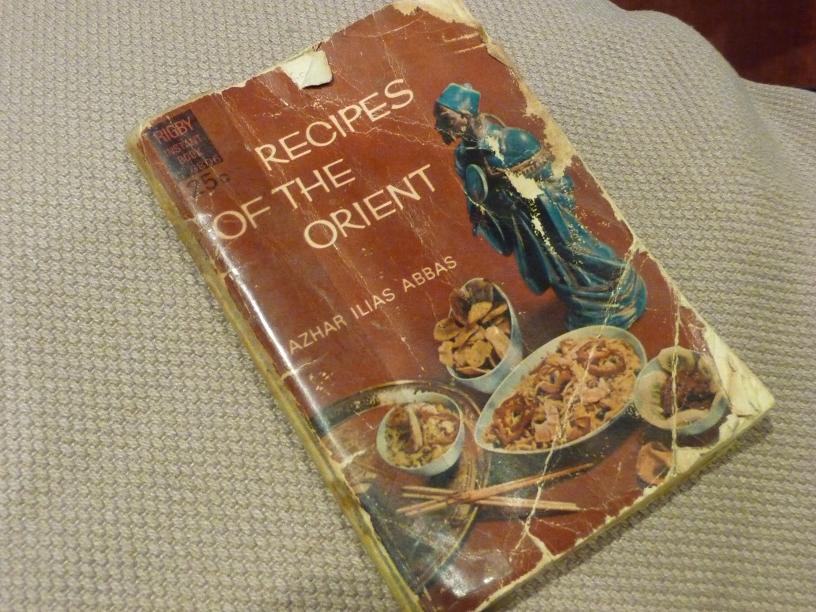
Relying on a combination of observation and Recipes of the Orient (published in 1968 and bought by my mother following her return from the honeymoon) my mother and I managed to develop a recipe which evokes (although never exactly captures) sup ayam in the twilight by the side of a Javanese road.

* other that the whole monkey incident, which occurred due to a misunderstanding about a breadfruit I had stashed in my backpack. Once I surrendered the fruit, the monkeys let me be.

** a lightly spiced and heavily sweetened soya sauce syrup


Sup ayam (Indonesian chicken soup)

Serves 6

1 whole chicken, free range. At least 1 kg (note – a 1 kg chicken will make enough for 4 people. For more serving, used a 1.5 kg chicken, or add additional vegetables)
3 inches ginger, grated (you can use less if you are not a big ginger fan, but it is a key feature of the soup)
6 cloves garlic, minced
2 onions, chopped into 1cm dice
2 tablespoon soya sauce
2 potatoes, cut into 1.5 cm dice
1 small head broccoli, cut into small pieces (use the stalk as well – trim and dice)
2 carrots, peeled and cut into 1.5 cm dice
½ head cauliflower, cut into small pieces
1 bunch bok choi or choi sum or similar

Boiled white rice and sweet chilli sauce, to serve

In a very large pot, add chicken, garlic, ginger and half the diced onion. Cover the chicken with cold water, bring to the boil. Reduce heat and simmer for about half an hour (essentially this poaches the chicken)

Remove chicken and set aside. Top up the chicken stock with additional water (you could use chicken or vegetable stock, but I don’t bother) and bring to the boil. Add 1 tablespoon soya sauce. Taste. If required, add remaining soya sauce and/or sea salt. If I’m being fancy, I skim and strain the stock – but it’s really not necessary.

When the chicken is cool enough to handle, remove and discard the skin, and shred the meat. Set aside. (This is both messy and time consuming. Alternatively, use 750 gm chicken mince, brown in a small amount of peanut oil, then add water, ginger etc).

Bring the stock back to the boil. Add potatoes and cook for about 5 minutes. Add remaining vegetables and onion, bring to the boil and cook for a further 5 minutes. Add chicken meat and heat through.

Serve with a spoonful of rice and sweet chilli sauce.

Wednesday, March 3, 2010

Comfort food: soft scrambled tofu

Some days are harder than other days.

There are days when you wake up tired and drag yourself through work and then home again. Days with headaches and not enough coffee and a vague feeling that a nice nap would be good.

Days when you can’t be bothered to cook much, despite the giant purple cabbage you were so excited about the day before and ideas for mustard roasted chicken and smashed potato with bacon.

For some, the appropriate balm for such trying times is cheese-on-toast, mash, macaroni-cheese, shepherd’s pie or chocolate ice-cream. The theme tends to be cream and carbohydrates.

All perfectly valid.

For me, I crave either one of two things: Indonesian chicken soup (sop ayam, the most blissful experience of chicken stock, vegetables, ginger, rice and chilli sauce) or scrambled tofu. I can’t explain why chilli features so prominently as comfort food for me.

Simply that the other night when I limped home, wrung out and ready to curl up in bed, it was soft tofu laced with fresh chilli, spring onions, garlic and ginger that I craved. The consistency of baked custard, salty with soy sauce and speckled with a sharp kick. Baby food for grown ups.


Scrambled tofu

300g silken tofu
2 medium hot chillies, thinly sliced
5 shallots, thinly sliced
½ inch ginger, very finely chopped
2 clove garlic, very finely chopped
Salt and soya sauce to taste

Heat a little oil in a non stick pan. Add chillies, ginger, garlic and shallots and fry off for about 1 minute. Add tofu in a single piece and break up gently by crushing with the back of a wooden spoon. Shake pan gently until tofu is hot all the way through. Add salt and soya sauce to taste. Serve as is, or with steamed rice. Go to bed early.

Sunday, February 7, 2010

Panzanella, past and present


I am not very good at following recipes

I like ideas. I tend to treat recipes as a general guideline. Often I buy cookbooks just to look at the pictures. It’s an approach that has some draw backs when it comes to anything involving gelatine.

I struggle with the concept of ‘authentic’ food. That is, with the argument that unless a recipe is executed in a certain way it isn’t ‘really’ that food at all. I get very confused very quickly when I start down this line of thought.

It’s not that I dispute that certain foods have traditional execution, nor that certain foods have specific historical origins.
It’s more that I am uncomfortable with any tendency to essentialise culture. When we try to fix a food, really pin it down, deny change or innovation or variation, we are starting too, to essentialise the culture the food is connected to. In making the food absolute, we also start to separate the food from its immediate current cultural context (which changes), and fix it at a point in time, somewhere in that culture’s past. We are making all kinds of assumptions about what is real about a culture, about then being more real (and maybe even better) than now.

We may eat the same food our grandparents ate, but we eat it for a different reason, in a different time, sometimes in a different place.

Take this too far, however, and we run the risk of losing what is special and meaningful about food and its place in our cultures. We risk making what we eat empty of any symbolism at all – a thing completely independent of any context, other than flavour.

I think of recipes as being an expression of concept: the way of living in a certain culture, a certain time and place. To me, what is important about a recipe is the motivation, the story behind the ingredients and method, not the ingredients and the method themselves.

Some of my favourite ‘recipes’ originated as a direct response to the immediate local environment. Most are grounded in seasonality, availability and practicality. Abundant, fresh and diverse seafood? Make bouillabaisse. It doesn’t matter to me that I don’t have scorpion fish (the local fish of the port of Marseille, where the recipe originated). It will still be bouillabaisse for me. You prefer hard boiled eggs to poached eggs and don’t like anchovies? I think we can still make Caesar salad.

Yesterday’s bread and a basket full of ripe tomatoes? It can only be Panzanella, regardless of whether I have basil (I don’t), whether I toast and/or soak the bread or whether we’re in Tuscany (although this last one would certainly improve matters).

The recipe represents the past and the timeless. The act of cooking expresses the practical reality of what it is in the fridge right now. Somewhere in between the two we are creating, maintaining and continuing the cultures within which we eat.

In the following and the not following of a recipe we have an opportunity to remember the past and another place, and at the same time tell a story about how we, here and now, actively bring that past with us into the present.
Panzanella, as made for lunch today*
Serves 2
1/3 loaf left over bread. In this case, a green olive white flour loaf.
250 g cherry tomatoes
½ red onion, sliced into very thin wedges
½ bulb fennel, very thinly sliced
1 cucumber, peeled, de-seeded and thinly sliced
1 clove garlic, crushed
Juice ½ lemon
3 tbsp finely chopped parsley
Good slurp oil oil
About 1 tbsp balsamic vinegar
Sea salt

Tear the bread into largish chunks (about 1 ½ inch cubes). In a large fry pan, toast bread with a little olive oil until a bit crunchy on the outside but still soft-ish on the inside. Set aside.

Cut the cherry tomatoes in half, and squeeze the juice and the seeds of each half into a bowl. Throw the squished tomatoes into the (now empty) frypan and turn off the heat (I find the residual heat is enough to bring out the sugars of the tomatoes a bit more).

Add balsamic vinegar, olive oil, lemon juice, parsley, garlic, onions, cucumber and fennel to the tomato juices and season with sea salt, allow to marinate for about 5 minutes. Toss the tomatoes and bread through and serve.

* Recipe may change next time I make it.

Sunday, January 24, 2010

Chewing Thoughtfully

Despite my eclectic and occasionally odd up-bring there is no escaping that I am firmly middle class. I work an office job, have a university education, live in a lovely inner city apartment, drink caffe lattes and travel to exotic locations. I have the luxury of dining out, choosing between Asian-European fusion or traditional French or molecular gastronomy or Italian bistro or high-end hawker food or the local Vietnamese noodle dive. I am, by any measure, a privileged person.

This privilege is multiple – I have the resources and time to eat out. I can afford to be discerning about the quality of the ingredients I buy. I have easy access to speciality and hard to find tasty items. My pantry includes no fewer than seven different vinegars, handmade orecchiette, two kinds of polenta, unbleached organic flour, vino-cotto and verjuice, wakame, miso paste, 37 different jars of whole and ground spices*, three different types of salt, and my fridge has preserved lemons and Parmigiano Reggiano and fresh yoghurt.

I have time to source produce, to shop and to cook. Pork belly and fresh scallops and imported cheese and fresh, local organic vegetables are all within walking distance.

I have the experience and education – both formal and informal – to feel confident to explore different flavours, different food cultures and difference methods of cooking. I have the luxury to be passionate.

More often that not, I take all this for granted.

Eating well should not be difficult, I think, for anyone. Eating as well as I do? I am lucky.

And it is, I think, mostly a matter of luck.

According to the United Nations, 1.02 billion people do not have enough to eat. This includes millions of people whose lives are disrupted by war, drought, environmental and natural disaster. Who are homeless, landless, state-less, jobless and moneyless. According to the World Health Organisation, 1 billion people are overweight, with an estimated 300 million considered obese – the other end of the spectrum of malnutrition. Increasingly it is apparent that there is a connection between obesity and socioeconomic status – unsurprisingly, the higher your socio economic status the better your access to a fresher, wider variety of food. The more likely you are to be physically active and healthy. Eating well is political.

In developed and developing countries people are under-nourished and poorly nourished - not just because of reasons of starvation, but malnourished because of poor diet, underweight or overweight, healthy eating and eating well are, statistically speaking, the domain of the privileged.

Not only the ‘rich’ deserve to eat well. Everyone deserves to eat well. To know the pleasure of a meal, and not just hunger or necessity. Food is something fundamental about our humanity – not just as fuel, but as fulfilment. Feasting and fasting are central to so much religious practice, eating and drinking are so much a part of our cultural and secular celebrations (the Thanksgiving Turkey, the Christmas Ham, the birthday and wedding cake, the celebratory toast, the Burns’ Night Haggis, mooncakes). Food as symbolism - not always accessible to so many.

Fair-trade, organic farming, slow food, artisan produce, local sourcing, farmers’ markets – the domain of the wealthy. These same luxuries – small pieces of a movement toward more equitable access to resources. Which isn’t to diminish the role that large multinationals have in supplying and supporting the billions of the world’s hungry – but to acknowledge the importance of developing a structure whereby people cease to live hand to mouth and live, as it were, land to mouth. Sustainable living.

Yes, it is a little more complicated and a little bigger than this. International relations, trade policy, national economies, world peace. Options: do nothing or do something.

I am grateful for what I have.

I want the world to be different.


* Slight exaggeration (cinnamon sticks and ground cinnamon, cloves, all-spice, coriander, cumin, cardamom, whole and ground nutmeg, mace, paprika, smoked paprika, saffron, ginger, juniper berries, star anise, nigella seeds, chilli flakes and ground chilli, pepper, turmeric, mustard seeds, caraway seeds, Chinese five spice, sumac and fennel seeds).


Chickpeas and silverbeet

Fancy food isn’t always the food that is nourishing for the soul.

1 tin or 1 cup dried organic chickpeas
6 cloves locally grown garlic, finely minced
1 brown onion, diced
1 bunch fresh silverbeet, thinly shredded
I lemon
Salt pepper
3 tbsp olive oil
If using dried chickpeas, soak overnight. Add chickpeas to a saucepan of boiling water and cook until tender. Drain.

For tinned chickpeas, drain and rub to remove the thin skin.
Heat olive oil in a large fry pan and sauté the onion and garlic until it starts to soften. Add chickpeas and cook for ten minutes, taking care not to brown the onion and garlic.

Add shredded silverbeet, and salt and pepper to taste. Cook, stirring occasionally, until the silverbeet is soft, and starting to crisp at some edges. Squeeze over the juice of one lemon.
Serve hot or at room temperature with bread or brown rice.