Showing posts with label vegetarian. Show all posts

Tuesday, February 22, 2011

Peaches and cream (and chilli and cheese) AKA salsa and saganaki

Peaches are late summer. The tangy sweet-sour of yellow peaches and the fragrant sugariness of white peaches, fuzzy-furry skin and juices dripping down my chin: bliss (albeit sticky bliss).

I grew up on the remnants of a peach farm. I am never short of ideas about what to do with them*. Cut in half, drizzled with honey and scattered with flaked almonds, roasted in the oven for half an hour. Poached in sugar syrup for 30 minutes, then peeled to reveal the transferred pink tinge on the beautifully sweet and yielding fruit. Pureed and turned into sorbet (or better yet, into a Bellini). Sliced and tossed with jamon and buffalo mozzarella and rocquette. Cooked down into jam, like my mum used to make, with walnuts, served with cheddar. Atop a frangipane tart. In tea cake. The classic combination: peaches and cream.

So many temptations. Such a short season.

Cheese is just grown up cream. And peaches are peaches. Classic combination.

* I mean, after you tire of eating them fresh and ripe in the sun. As if you ever would. I bought a kilo and half this evening and ate one on the way home. Even though I knew I was using them for dinner.
Peaches in chilli syrup with fried haloumi*

Serves two for dinner or four as an starter

Drawing inspiration from Australian-Greek chef George Colambaris, who tops saganaki with figs in pepper and honey.

1 ripe yellow peach (score the bottom with a cross)
1 ripe white peach (score the bottom with a cross)
1 very hot red chilli, finely minced, seeds retained
3 tbsp sherry vinegar (or white vinegar)
3 tbsp honey
1 tbsp whole basil leaves
1 tbsp shredded basil leaves
1 small bulb fennel, finely diced
½ small red onion, finely diced
1 roasted red pepper, peeled and cut into small dice (about ¼ inch)
Eight spears asparagus
250 gm haloumi cheese, cut into 1 cm thick slices
2 handfuls rocquette
Olive oil

To poach the peaches: bring a saucepan of water to the boil. Carefully place peaches into the boiling water, simmer for about ten minutes. remove with a slotted spoon. When cool enough to handle, peel off the skin. Dice into small dice (about ¼ inch)

To grill asparagus: heat a grill pan to very hot. Brush asparagus spears with olive oil, grill until tender and char marked (about 5 minutes). Set aside (they don’t need to be hot when you serve the salad).

To make the chilli syrup: in a small saucepan bring the vinegar, honey and chilli to a simmer. Reduce by half. Taste. Add extra dried chilli flakes if not hot enough. Or substitue sweet chilli sauce. It's up to you.

To make the salsa: toss together peaches, basil, fennel, onion, red pepper. Season with a little black pepper and stir through two to three tablespoons of the chilli syrup. Taste. If too sweet, add a little lemon juice.

To fry haloumi. Heat a tbsp oil in a non-stick fry pan (or saganaki, the pan for which the named). When hot, add haloumi slices. Leave to cook until the slices are deeply browned (or until your smoke alarm goes off), then turn over and cook the other side. When cooked, squeeze over some lemon juice.

To serve: place a handful of rocquette on a place. Arrange haloumi slices and asparagus spears, top with peach salsa. Drizzle with a little chilli syrup if at all pretentious.

* Type of cheese. Texture kind of like rubber, but in really, really good, salty way. See http://en.wikipedia.org/wiki/Halloumi. In a pinch you could substitute fetta, if you dusted it with flour before frying (I have done this) – but be very careful as fetta melts much more quickly.

Thursday, February 10, 2011

Fresh vegetables poached in clean water

Guide books for western tourists in India have two key and related pieces of advice: drink bottled water. And only eat well-cooked food. Preferably boiled or deep fried. Preferably in front of you. Preferably no meat.

Water is treated in major Indian cities, just not necessarily in the ways that Australian or Americans or the French are used to. So chances are tourists will react a bit adversely. And this links back to the cooking methods – sufficient heat will kill off those minor bugs, so better safe than sorry. And because electricity can be a bit hit and miss (and hence so can refrigeration) meat is best avoided.

Delhi in the middle of winter is pretty cold. Look at it on a map – it’s a long way north of the equator. The Himalayas aren’t that far away. It’s not exactly Birmingham in January, but even if you could safely eat the salad, chances are there wouldn’t be much of it around. It’s not in season.

What you do have on tap is dahl. Lots and lots of dahl. Which I happen to love. Thin soup like consistency, fire-hot on the spicy scale with idlies (streamed rice dumplings) floating in a bowl for breakfast. Thick dark lentils enriched with ghee and cream with whole wheat rotis. Parathas (a whole wheat unleavened bread) stuffed with thick paste- like dahl. All good. Breakfast, lunch and dinner.*

But the butter and oil and carbohydrates and general stodge takes its toll. Lightly steamed vegetables and salad and fruit and a really good steak** starts to have an appeal after a week or so.

* I need a break before I can recreate these in all their glory.

** I know, cows are sacrosanct in India. But when a girl craves steak she craves steak. Good, medium rare, organic heritage-breed eye fillet steak. With little criss-crossed charred marks and a melt-in-you- mouth texture.

Vegetables poached in beurre monte

Serves two people desperate for fresh vegetables

1 litre water
60 gm butter
4 baby carrots, peeled and cut in half length ways
4 brocollini stalks
1 fennel bulb, sliced into thin wedges
2 small yellow button squash, cut into thin wedges
10 cm piece leek, sliced lengthways into thin strips
1 small zucchini, sliced into batons
100 gm green beans, top and tailed

In a large deep fry pan, bring 1 litre of water to a rapid boil. Reduce heat to a simmer, whisk in butter, half a teaspoon at a time until emulsified (this make a very thin beurre monte). Add a teaspoon of sea salt flakes.

Bring back to the boil. Add brocollini and carrots. Simmer for about 3 minutes. Add remaining vegetables and simmer for another 3 minutes. Remove vegetables to a warm plate. Scatter with chopped herbs, sea salt and cracked pepper to taste. Serve with char-grilled steak.

For a simple sauce for steak, reduce remaining poaching liquid by half, and then whisk in approximately 1 tablespoon butter, half a teaspoon at time and a teaspoon of Dijon mustard. This should result in a thickish silky sauce, to be spooned over a perfectly cooked eye fillet.

Saturday, November 27, 2010

What is a waldorf anyway, a walnut that’s gone off?*

New York city: the Waldorf Hotel. Circa 1893-1896. Oscar Tschirky. Swiss. Not a chef.

Apple. Celery. Mayonnaise. Later addition: walnuts.

The Waldorf Salad.

Its genius lies in its simplicity. Like coleslaw, so very, very dependent on the quality of the ingredients. Like coleslaw, so easily and so frequently the victim of grave injustice.

The key is crunch and bite. The crisp clean taste of very, very fresh celery. Inner stalks only, with the tender pale green leaves retained for garnishing. Tart apples, preferably peeled. Granny Smiths are perfect, that hint of sourness to their juicy sweetness. And walnuts. Toasted. Some puritans insist that they are also peeled. I have never found this necessary.

Nothing is more important than using fresh walnuts. Or conversely, nothing is more rank than the taste of rancid nuts, the oils sour and foul. My preference is to purchase mine from a specialist nut-purveyor at the market. I know that they will be correctly stored and have frequent turn over. In a pinch I will buy them in vacuum sealed packets, sold in the supermarket next to the dried herbs and spices and sugars and salts (understandably my favourite aisle in the dreaded supermarket).

And then there is mayonnaise. At which point I give up. I am overly sensitive to what I consider a crime against both condiments and salad dressing: the mayonnaise jar. How a sauce so beautiful has become something so unredeemably fetid I cannot comprehend. I can usually find it in me to be at least a little understanding of food choices that differ from my own, but mayonnaise? Like the ungodly offspring of cream and industrial solvent, industrialised, commercialised, commodofied, squeezy-bottle mayonnaise has no place in the hallowed grounds of the waldorf salad.

I find homemade mayonnaise gentler and richer than any store bought jar (and I do grudgingly admit, some are better than others, and indeed almost edible). It is easier too, to tailor one’s dressing to the salad. A hint of mustard, a little walnut oil, thicker rather than pourable, the better to bind the ingredients without drowning them. A good discipline to learn: a basic emulsification, the miracle whipping of eggs yolks and oil. Less recipe and more technique.

And like every canonical recipe, the Waldorf Salad suffers from the non-canonical reinterpretation. So my secret: soak the apples in apple-cider vinegar for 15 minutes to enhance the sweet-and-sour qualities. A hint of cream cheese in the dressing. And slivers of shaved mouse-tailed pink radishes, hot and peppery and a pop of colour.

* Faulty Towers “Waldorf Salad”, 1979


Waldorf-ish Salad

Serves four as a side or light lunch

2 Granny Smith apples, peeled, cored and cut into 1 cm dice.
1 ½ cup celery, cut into 1 cm dice
1 tbsp apple cider vinegar
¼ walnuts, toasted (roast in a moderate oven for about 6-8 minutes)
½ cup mayonnaise (approximately)
1 tsp cream cheese (optional)
6 breakfast radishes, thinly sliced or shaved.
1 tbsp small celery leaves
1 tbsp extra toasted walnuts

Mix the apple and celery with the apple cider vinegar in a non-reactive bowl (ie, not metal) and leave sit for about ten to fifteen minutes (meanwhile, make the mayonnaise).

Mix the cream cheese (if using) into a quarter cup of mayonnaise, then toss with the apples, celery shaved radishes and toasted walnuts. If necessary, add extra mayonnaise until the salad is coated but not drowning.

To serve, scatter with extra walnuts and celery leaves.

Great with chicken or turkey.

To make mayonnaise:

2 very fresh egg yolks (keep the eggwhites for macarons or meringue or soufflé or something equally delicious. They freeze well too).
1 tsp Dijon mustard
2 tsp vinegar (white wine vinegar or tarragon vinegar)
250 ml oil (any kind of oil is fine. I like olive oil, which can have a strong taste. Sunflower oil or canola oil also works just fine)
Sea salt and white pepper, to taste

Make sure all the ingredients are at room temperature.

In a large non reactive bowl (I use pyrex for just about everything) beat the egg yolks with the mustard and 1 teaspoon of vinegar. Beat until smooth and creamy looking.

Drizzle in 1 teaspoon of oil, and beat until fully incorporated. Drizzle other teaspoon, and beat until fully incorporated. Continue this process, drizzling and beating in tiny spoonfuls of oil until about half the oil is combined. Then, drizzle the remaining oil in a very thin steam, beat constantly until the mayonnaise is the desired consistency. Taste, and add salt and white pepper if needed.

Can be made with a wooden spoon or hand whisk or even electric beaters. The trick is the very slow incorporation of the oil into the egg yolks.

Monday, November 8, 2010

Jack and the beanstalk (warm bean salad)

Beans and peas are so ubiquitous that it can be hard to think of them as anything special. That is in fact a driving narrative force in the whole Jack and the Beanstalk story. His mum dismissed those beans and tossed them out the window. The rest is history (or fairytale). Beans, I believe are valourised by this story.* Same goes for peas, cf: The Princess and the Pea.

Beans are magic.

Broadbeans, green beans, peas and sugar-snaps, butter beans. And purple-pink speckled borlotti beans.** All freshly podded or top-and-tailed or de-stringed, according to phylum-order-family-genus-species.

Sweet and crunchy and soft and earthy, fresh legumes are one of the luxuries of spring, a verdant and humble apology for a winter’s age of dried pulses.

* Yeah, ok, arguably the beans are only vindicated by virtue of the access they provided to the golden goose or whatever was at the top of the beanstalk. The moral of the story, to my rather myopic view, is: vegetables are really, really good.
** Tragically, they lose their spots when cooked. And they must be cooked, for at least ten minutes or they might kill you. See magic. Seriously - some beans contain quanities of a lectin called phytohaemagglutinin, which can be quite harmful to humans. Cooking reduces the harmfulfulness. See http://en.wikipedia.org/wiki/Phytohaemagglutinin


Warm spring bean salad

Serves 2

300 gm (unshelled) fresh borlotti beans (you should be left with about 100 gm of shelled beans)
300 gm (unshelled) fresh broad beans (you should be left with about 100 gm of shelled beans)
200 gm (unshelled) fresh peas-in-the-pod
1 bunch asparagus, cut into 5 cm lengths
100 gm green beans, cut into 5 cm lengths (or use a mix of butter beans and green beans)
2 tbsp olive oil
½ Spanish onion, finely diced
1 garlic clove, minced
2 tbps finely chopped parsley
Celery salt (or plain sea salt)
100g Soft goats cheese or curd or a goat’s milk fetta cheese.

Shell the borlotti beans. Boil in salted water for about 15 to 20 minutes, until tender but not mushy. Drain and reserve.

Shell the broad beans. Blanch in boiling water for about two minutes. Strain and remove the pale skins to reveal the bright green beans. Set aside with the borlotti beans.

Blanch the peas and beans for about three minutes, until just cooked. Strain and set aside with the other beans.

In a large fry pan, heat the olive oil and sauté the onions and garlic on a medium heat until translucent. Add the asparagus and cook for about three minutes or until the asparagus is just cooked through (but still has a nice crunch). Add the reserved vegetables, the parsley and celery salt and toss until all the vegetable are combined and warm through.

Serve with crumbled goats cheese.

Monday, October 18, 2010

Clear tomato soup

Abundance is a big, ripe, round word, almost onomatopoeic in its application to the mounds of more -than-ready-to-eat tomatoes tumbling into the market stalls as spring heats up.*

There is nothing I do not adore about the smell of tomatoes. Sugar and acid and that strange spicy scent of the stems and leaves.

There is a stall at the market which categorises tomatoes according to a range of juxtaposed and seemingly arbitrary taxomonies. Place of origin (Murray Bridge, Bacchus Marsh), variety (Aledaide*, roma, cherry, ‘field’), method of cultivation (field, trussed, hydroponic, magic), and ripeness (ready to eat, green).
And purpose: cooking. That is, soft, falling apart, two-days-past ripe, almost mushy with splitting skins. And at $2.50 per kilo, irresistible for someone whose winter stocks of passata and chutney and tomato sauce and paste are exhausted.

Tomatoes are sexy. Ther’s no denying the call to summer present in their lush, lush redness, like pouting lips, ready for the the hottest, wettest, tomatoiest kisses. Tomatoes are ‘come hither’. They’re anybody’s, everybody’s. They’re easy.

So in an effort to pour ice onto that tomato induced libido, chill. To make summer’s good-time gal an ice-queen, she has to strip. And strip she did*.

Blended, strained, frozen until the first ice crystles start to form, this blush-tinged tomato soup is a tomato flavoured slap in the face.

Still easy though ...


* Don’t be deceived. It snowed last Saturday. It snowed. It never snows but it snowed.

** which I thought was part of the ‘place of origin’ schema, but it turns out it is a variety of tomato – more pinkish than reddish, and very flavoursome, firm fleshed.

*** Note: the tomato, not me.


Clear tomato soup


Serves 4 as a light starter, or 2 for a meal with salad and bread.

1 kilo ripe, ripe, ripe tomatoes
1 cup fresh basil leaves
2 cloved garlic, peeled
2 ripe but firm tomatoes, de-seeded and peeled, cut into small diamonds
2 tbsp small basil leaves, to serve
Salt and pepper to taste

Place the tomatoes, basil and garlic in a blender and blend until smooth. Place a muslin lined strainer over a large bowl and pour in tomato pulp.

Place in the fridge to strain over night (at least eight hours). Do not press the mixture (this can make it cloudy).

The next day, taste the tomato ‘water’. Season with salt and pepper. (note – I reserve the left over pulp and add it to passata or baked beans or casserole – nothing goes to waste!)

Place in the freezer until ice crystals start to form at the edges. (you can also serve this hot – just heat until warmed through – wait until soup is hot to season it, as hot food generally needs less seasoning than chilled food).

Spoon into bowls or glasses, top with reserved tomato diamonds and basil leaves.

Wednesday, October 13, 2010

Choke on it, or, Not being perfect, as demonstrated by the artichoke

There are people – they know who they are, and, in all honesty, I know who they are too – who are very, very good at food. They know it all. It’s old hat. No surprises. Who’ve forgotten how to be intimidated.

I am not one of those cooks. I forget to sharpen my knives and I don’t measure things. I can’t pronounce half the fancy French things I like to eat. I once dropped a roast leg of lamb on the kitchen floor in front of guests before serving it. I have set fire to my own saucepans making soup. I tried to make stock from the carcass of a shop-bought barbequed chicken and ended up with a pot full of mushy artificial stuffing.

Artichokes scare me.

It is unfamiliar, strange, unique. A thistle (a thistle flower bud, I think), for goodness sake. Kind of stringy and tough-ish. With a reputation for fussiness of preparation and eating. (Wipe it immediately with lemon to stop it browning. Remove the ‘hairy choke’ – whatever that is! Dip each petal in butter then scrape with the teeth). Expensive. The first time I ever even touched, let alone cooked, a live, real, fresh one (as opposed to the delicious deli-bought variety) involved potential public humiliation. The kind with internet video footage (which sounds way worse than it actually is, I garuntee).

Artichokes scare me.

But in this fear is what food is for me: constant wonder, constant interrogation of the edible world, never quite being assured or certain as the eater, the preparer, the sharer, the host. I will never master the artichoke. I will never become a chef or kitchen wiz. But I will cook it, and eat it, and serve it – differently each time. Sometimes better, and sometimes undercooked or too mushy or oily or salty.

And the fear will be something a little bit like love: the bottom dropping out of my stomach when I realise that the possibility of everything going wrong is also the possibility of everything going right.

This spring has been the spring of the artichoke. Guided in these first heady weeks by Maggie Beer’s homey and casual advice, artichokes braised in verjuice and olive oil*. With more confidence, cooked in lemon juice and stock. Set aside and eaten cold. Minced and used as the stuffing for ravioli. Or omelettes.

Little by little a familiarity has crept in. A cautious letting down of my guard. Not enough for complacency, but definitely a budding romance.


* I am in love with Maggie Beer, AOM, in much the same way as I am obsessed with the J Cheese building. The J Cheese building is a private residence in an inner city suburb, remarkable for no other reason than that the words ‘J Cheese’ appear, moulded into it’s high, art-deco facade.

And I desire the J Cheese building for no other reason than the appearance of these words. To own a thing – be it a building or a name – that immediate evokes the presence of some desirable, edible, substance (Cheese, Beer) – is a concept of great attraction to me. And salivation. It’s Pavlovian. Which also makes me think of pavlova. Which also makes me salivate.


Artichokes with leeks and pasta

Serves 4

2 lemons, juiced
1 tbsp olive oil
¼ cup verjuice
1.5 litre (ish) water or vegetable stock
4 large artichokes (pick big ones with very tight petals and long stems).
2 garlic cloves
1 leek, cut into ½ cm wide, 10 cm long strips
400 gram very good quality dried pasta (I like filei calabresi for this. I am pretty fussy about pasta, and only dried, very, very dense duram wheat semolina pasta will work for this)
1 cup freshly podded peas

Parmesan cheese, to serve

In a large saucepan or deep pan heat the olive oil stock, verjuice and juice of one lemon.

Half fill a large bowl with water and add the juice of the remaining lemon.

Now – prepare the artichokes. First, start pulling off the outer most petals – peel and snap in a downward motion. Keep doing this until you are left with petals that are mostly a creamy yellow colour (about a third of the petals will be discarded). Then, with a very sharp knife or peeler, trim the stalk and broken petal stubs until the softer inner part of the stem is revealed. Rub any cut surface with the inner surface of the lemon peel (to stop it browning). Cut the top part of the petals off, at least a third of the way down. Cut in half lengthways, and with a teaspoon, remove the ‘hairy choke’ – that is, you’ll notice that at the base of the artichoke, before the petals start to become petal-y, a kind of fluffy soft looking crescent. Slip the curve of the spoon in under this, press back toward to top of the petals and then slip out. If you cut the petal off the top back enough, you can also scoop this out from the top, leaving the artichoke whole to cook.

Cut in half length ways again, and place in the bowl of lemon water, while you repeat with the remaining artichokes.

Add all artichoke quarters to the pan of stock and bring to a simmer. Cover with a lid and cook for about half an hour. The artichokes turn kind of grey-ish, which seems unappetising, except I’m pretty sure they are supposed to be this colour ...

After half an hour, remove the lid and add leek strips and pasta. The idea is to cook the pasta in this stock by reduction, a little like making risotto. If the liquid looks like running dry before the pasta is cooked, add a little more water. The pasta will take around half an hour to cook.

Meanwhile, cook the peas in a pan of simmering water until just cooked. Strain and set aside.

When the pasta is cook, taste and add salt as required (I find that this befits from a generous amount of sea salt) – stir through peas, and serve, topped with a little grated parmesan cheese.

Sunday, September 5, 2010

Mung beans and whole grains

I recently saw a picture in a magazine of toasted whole wheat with a slow cooked egg yolk. Something about the dark crunchiness of the wheat appealed – I could imagine it’s dense, chewy texture, subtly enhanced with the rich gooeyness of the egg yolk. It looked simple. Basic. Impossible to tell, from the picture, if it was enhanced with something extravagant like truffle oil or handpicked wild micro-herbs. No recipe, just a picture amongst many pictures.

Whole-gains seem the terrain of hippies and health nuts, the food of anaemic and fashionable vegans and ultra-fit protein obsessed gym junkies. It sounds like a diet, or an extreme life-style choice. Which immediately conjures a sense of deprivation. Dieting seems to evoke a sense of loss of more than just weight. A world without sugar and fat and carbs and sweets and treats. A world without flavour. A world of rabbit food and cardboard tasting meal-substitutes.

And in all honesty, at the end of a winter that I dealt with primarily through laziness and comfort food, a reassessment of the healthiness of what I eat is probably called for. Not ‘a diet’, not a fad or a quick fix. Just a subtle realignment, now that my hostility to the season can be set aside for another year.

But there is something about toasted unprocessed whole grains, nutty and caramel, crisp and yielding, with a taste like the smell of cooking toast, that is homey and satisfying and comforting. On close inspection, toasted grains have nothing in common with deprivation. Despite the indisputable health and environmental benefits, whole grains are an unexpected treat, and now, more than a little bit high-end. Hence their appearance in a glossy magazine devoted to the valorisation of the chef’s arts.

I could have gone out and bought some farro, the oh so cool grain of the moment, some kind of ancient and original variety of wheat. Or whole wheat kernals. Or mixed red and black quinoa with onions and garlic and spinach. But I have barley in the pantry, set aside for adding to rustic soups. And what better to match it with than mung beans, that other shared bastion of the hug-the-earth-cum-health-kick movement?

There is something so terribly retro about mung beans. Reserved for the super-health conscious and hippies, they’ve hung around in health food shops and food co-ops with an endless seventies vibe, kind of overlooked and forgotten.

With English mint and plenty of salt, this was fresh and earthy, and a little bit pretty. And ridiculously healthy.

Toasted barley and mung bean salad

Serves two

½ cup pearl barley
1 cup mixed bean shoots (ie, mung beans, pea shoots, chickpea shoots)
¼ cup fresh peas
½ cup torn mint leaves
½ cup snow pea shoots (green part only)
2 tbsp toasted pine nuts
1 tsp olive oil
1 tbsp lemon juice
Sea salt
Pepper


In a large non stick fry pan heat the barley over a medium heat, shaking the pan or stirring to prevent the barley from burning. When the barely is a deep golden colour, add two cups of water or stock and lower the heat. Simmer for about half an hour, until the barley is soft and chewy (and most of the liquid is evaporated. Strain and add to a large bowl.

Bring a small saucepan of water to the boil, add peas and cook for about 5 minutes. In the last minute of cooking, add the mixed mung beans, just to soften a little. Add to the bowl with the barley and remaining ingredients and toss to combine. Season with salt and pepper.

Tuesday, August 3, 2010

Eats roots and leaves: nose-to-tail celery and celeriac soup*

Wastefulness. At one end of the input-output spectrum we throw away millions of tonnes of perfectly edible food every year.

At the other end of the spectrum, we limit, and therefore waste, the options available as food. Our environmental impact is such that species are become extinct at an alarmingly exponential rate (they ate dodos people. And don’t even get me started on the implications of bee extinction**). In terms of food production and consumption we are also voluntarily limiting the variety of species that we chose to eat***. And even more so, we are choosing only to consume a very small part of those species that we do choose to eat.

Homo sapiens, the smart men, need to eat smarter. Nose-to-tail eating is a brilliant slogan for us carnivores. ‘Eats roots and leaves’ captures this for the herbivores among us. It’s true that not every part of every plant is edible. Some are in fact harmful. But beetroot leaves, broccoli stalks, grape vine leaves, and pumpkin seeds – all edible. Orange rind and pineapple skins make beautiful marmalade. Watermelon rind can be turned into pickles.

And pretty much every part of celery can be devoured.

Most of us are familiar with the stalks – the crunchy light green part, great with hummus or peanut butter (that may be my particular fetish ...). Wash, cut, throw away the leaves, right?

Alternatively – eat it all. Young celery leaves are lovely in salad. Older leaves can be blanched like English spinach or oven dried as crunchy snacks or even powdered for a concentrated celery flavoured dust. Even the tiny seeds are edible. As is the root.

Celeriac is a knobbly, bulbous root of a variety of celery. It has a subtle celery flavour and can be eaten raw (for example, julienned in French remoulade, a kind of mustard mayonnaise salad), roasted or fried (a little like potato, but less starchy) or steamed and pureed (try: half potato, half celeriac, significant amounts of butter, delicious).

Which all leads to soup: with a light creamy texture and a fresh celery taste, it is all the comfort of winter with all the promise of spring. Using every part of the celery plant.

* For those with a one track mind, the incorrect insertion of a comma can make all the difference. See Lyn Truss’ excellent work on gramma, Eat, Roots and Leaves

** In a nutshell, bees fertilise flowers. Fertilised flowers grown into seed producing fruit. See producing fruit are a) edible, and b) the basis upon which other flower-producing plants grow. Fewer bees means reduced fertilisation, which impacts on crops. Bees are a big deal for the farming sector. And bees are very sensitive to environmental change.

*** This is more complicated, because on one level this is being limited for us by the agricultural and retail sectors, but en masse, we-the-human-race are limiting our choices.


Thick celery and celeriac soup

1 bunch celery
1 brown onion
1 garlic clove
100 gms finely chopped bacon (optional)
1 celeriac (about 500g), skin removed and roughly chopped
1 lt vegetable or chicken stock
2 small potatoes, peeled and cut into ½ cm dice
Salt and pepper to taste
Sour cream to serve

Celery powder (in advance)*

Preheat oven to 50ºc.

Remove celery leaves. Spread out on an oven tray, bake in oven for around 45 minutes, or until dehydrated. When completely dry, blend in a food processor until finely powdered. Remove any spiky bits of stalk. Store in an airtight container (as with other dried herbs and spices, usually good for about 6 months).


Celery and celeriac soup

Finely dice the onion and 3 celery stalks (eat remaining stalks as a snack with peanut butter or hummus or tzadziki) and mince the garlic.

Combine with bacon in a large heavy based saucepan, and cook over a low heat until the onion is starting to soften. The low heat will melt the bacon fat – if not using bacon, add a teaspoon of olive oil.

Meanwhile, in a separate pot, blanch the potato dice in boiling water until cooked through (about 5-10 minutes).

When the onion is soft, add the celeriac and half the stock. Bring to the boil. Once boiling, add half the remaining stock and continue to cook until the celeriac is soft enough to smash with the back of a spoon. This takes about 25 minutes.

Blend the soup in a food processor or with a bar mix until smooth. Add salt and pepper to taste.

Return to saucepan and add remaining stock. If the soup is too thick, add a little water. Stir in the cooked potato and heat through.

Serve with a dollop of sour cream and a generous sprinkling of celery powder.

* I started making celery salt and got side-tracked - and voila, celery powder.

Tuesday, July 27, 2010

This porridge is just right. Food that your grandmamma would recognise

Porridge is immensely satisfying. Warming, sweet, sticky and filling: it is busting with the goodness of whole grains and fibre and yet it tastes like gooey breakfast pudding.

With dried and fresh fruit and nuts and natural yoghurt and honey and nutmeg and cinnamon - it is decadent and over the top and basically just really, really good for you. Unlike eggs and bacon or waffles or pancakes or coffee and a croissant, eating porridge for breakfast entitles me to walk around with a smug, self-satisfied look on my face. It’s ridiculously healthy and pretty basic yet in no way hints at any kind of deprivation.

Food doesn’t need to be complicated or sugary or buttery to taste good.

And food shouldn’t be boring or uninteresting or restrictively-limited in order to be good for us.

So, in the words of Michael Pollan, lets “Eat food. Not too much. Mostly plants”.

Like most things that are truly healthy, porridge is not overly processed (for rolled oats the oat-groats are hulled and rolled flat. ‘Quick oats’ are then also pre-steamed to hasten the cooking process). My deluxe version incorporates lots of fresh fruits. It has a variety of ingredients, all of which are pretty basic (that is, in or very close to their natural form). It is low in fat. Low in sugar, and most of the sugars are in their most natural, unprocessed form. It’s good and it’s good for you.

So when Pollan offers the nutritionally and environmentally sound advice that we “don’t eat anything your great-grandmother wouldn’t recognise” this porridge rises to the challenge. It’s food that looks like food. But more than that – it’s food that conveys a certain sense of nourishment beyond the sustenance it offer. It’s nurturing, wholesome, culturally centring food.

It’s food that looks like home. Even if you’ve never seen a farmhouse, you know that this is what you’d have for breakfast there. It’s the food of childhood stories and winter mornings and the countryside. Even if, like me, you don’t have a grandmother to make it for you and share it with you, it’s food that the archetypal grandmamma would make.

This porridge is just right.


Porridge that is just right

For each serving:

½ cup rolled oats
1 cup water
½ tsp brown sugar
1 tbsp sultanas or chopped dried fruit
¼ tsp each of nutmeg and cinnamon. Ground ginger is also lovely.
1 cup chopped fresh fruit (or mix in with frozen berries) – ie, pear, apple, passionfruit (banana and mango is delicious in summer)
1 tbsp low fat natural yoghurt
1 tbsp nuts (ie, walnuts, hazelnuts, almonds, pecans)
1 tsp honey
¼ cup low fat milk

Bring oats and water to a simmer in a small saucepan and cook until the porridge is thick and the oats are cooked (usually about 10 - 15 minutes).

Pour into a bowl. Sprinkle with sugar and dried fruit. Top with fresh fruit, then yoghurt and nuts. Drizzle the honey over, and pour milk around the edge of the bowl.

Monday, July 19, 2010

Eating the Winter garden

My mum’s garden is the source of all things tomato during summer. But during the winter months (and the cold that I am only just starting to come to terms with) she grows the softest, sweetest spinaches and chards, harvesting only a few leaves at a time, hence allowing each plant to continue to produce and grow. Bok choi too, and little green cabbages the size of a fist.

Cruciferous vegetables (chards and spinaches and cabbages) have a reputation for bitterness, but these leaves, straight from earth to plate in a matter of hours, are sweet and full of flavour. Not at all bitter or dull or watery. Thinly sliced and then very briefly sautéed in just a hint of olive oil, the leaves resembled a pile of seaweed or wet grass, deeply green with hints of purple and red. Just brimming with iron and vitamins and an overwhelming sense of freshness and vitality so lacking during the winter months.

Yesterday was icy cold, and I desperately needed the whimsy imparted to my day by two tiny brassicae: a minature Romanesco broccoli and a little purple cauliflower. These were a spur of the moment purchase at the market – it’s hard to resist the impulse buy when the merchandise is so utterly charming. And healthy. Nestled into a tangle of sautéed home-grown greens, accompanied by Brussels sprouts, these little steamed flower heads were delightful to look at and delicious to boot.

These was nothing particularly fancy about the meal. Finished off with a light grating of parmesan cheese and finely chopped curly parsley (the very essence of green - also from my mum’s garden), the whole thing was wholesome and fresh. There was a healthful goodness that the rich braises and roasts of winter sometimes hide. And yet there was a rightness, an earthy crispness that settled this very simple meal firmly in Winter’s heart.

All in all, a perfect Sunday supper.


An Edible Winter garden: sautéing and steaming

Sautéing is a method of cooking in which food is cooked super-fast, super-hot and all-at-once (in a little oil or butter). It’s a brilliant way of sealing in nutrients, as the food is cooked quickly, and nothing leaches out into water. It’s important not to overload the pan with too much stuff, as this reduces the heat, and therefore extends the cooking time. Because it is so quick, it can make more sense to split the amount you have to cook into two or three batches.


Sautéed winters greens

For one person: 2 cups shredded raw winter greens. As fresh as you can get. 1 tbsp olive oil.

Heat olive oil to very high in a large pan or wok. Add greens. Shake the pan or toss with tongs until cooked. This will take about two minutes. Season with a little salt and pepper.

Steamed tiny brassica

1 whole miniature cauliflower or ¼ cauliflower

Fill a large saucepan with about 2 inches of water. Place a microwave-proof breakfast bowl in the saucepan, so that the water comes two thirds up the sides. Place the cauliflower in the bowl. Cover the saucepan with a lid and bring to the boil. Cook for about five minutes, until the cauliflower is tender (will yield to a skewer). Carefully remove the cauliflower from the bowl, sprinkle with sea-salt and pepper to taste.

Saturday, July 10, 2010

Red wine braised cabbage

I detest winter.

What I want is mangoes, pineapples, coconuts, a mojito and a banana lounge. With an ocean view. And the scent of frangipani on the breeze. Every year, without fail, at this time of year, I start yearning for sunshine. Fiji, Vanuatu, New Caledonia. Phuket. Bali. Hoi An. I am desperate for warmth.

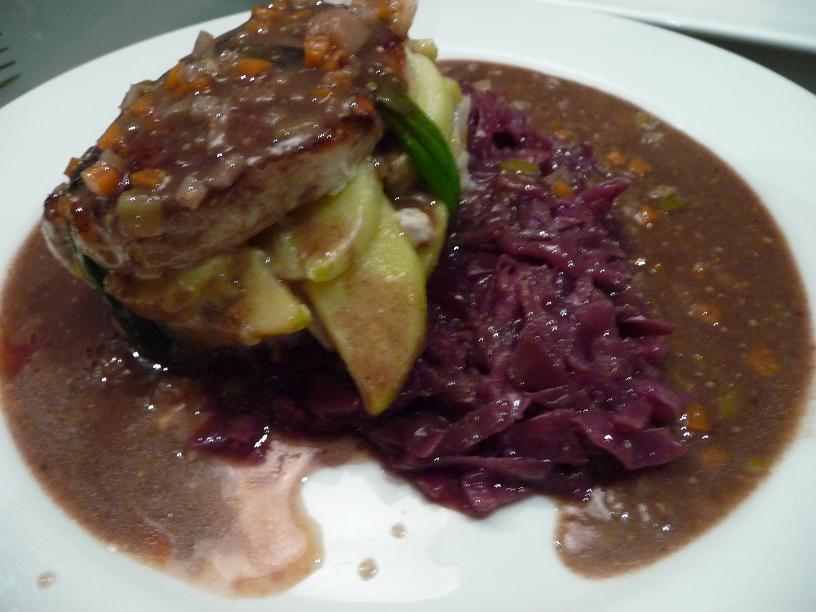
What I’ve got is the coldest day on record, and root vegetables. And cabbage. And onions. Red cabbage, oh so slowly braised in red wine, cooked until meltingly soft and sweetened slightly with honey, is all that is keeping me from rapid escape to a tropical island.

A pot of stock, simmering all day on the stove, fills the house with steam. All day braising in the oven heats the room. It’s not tropical humidity, but it is warm and savoury and comforting.

Winter, seasonally and metaphorically, has a place and a point. Winter is about slowing down and resting and waiting, and being patient. Winter, with its biting wind and bitter cold, demands we stay put and relax. There is a more than one way to hibernate. It took a little bit of sulking, but I reminded that for me, hibination is rich with casserole and soup and steamed pudding and curry and roasted joints and stock. Putting things on the stove and forgetting about them and having a nap.

Vegetables don’t, strictly speaking, require the long cooking times and gentle low heats that really benefit sinuous cuts of meat. But the slow, slow cooking breaks down the cabbage, rendering it silky-smooth, and the grated potato releases sticky starches, contributing to a result that is soft and rich, without being cloying or heavy. Opening the oven while it is half way through cooking releases a cloud of wine flavoured steam, heady and inspiring.

So while the cabbage does it magic in the oven, I pour a glass of wine, curl up with a book and a hot water bottle, and wait. I may be dreaming of summer: but this too is part of winter. Daydreaming and waiting.


Braised cabbage

I came across this recipe in the French Laundry Cookbook and was surprised that it was simple, healthy and just perfect for winter. I’ve changed the quantities around to allow for more sensible, family portions (Thomas Keller is a bit keen on the ‘tasting menu tiny portions’, which is a great for a restaurant but less cool for eating at home).

1 tbsp olive oil
1 medium sized red onion, finely diced
½ red cabbage, very finely sliced (technical term: chiffonnade)
240 ml red wine
2 green apples, peeled, cored and grated
2 tsp honey
2 medium sized waxy potatoes, peeled and grated
Salt to taste

Pre heat oven to 170ºc.

Sauté the red onion over a low heat on the stove top in an oven proof casserole dish (or in a saucepan and then transfer to a casserole dish. Stir in cabbage, apples and red wine. The red wine will come about half way up the vegetables.

Press baking paper to cover the cabbage, cover with a lid (if you have one, or foil instead).

Cook in the oven for about 2 hours (longer is fine).

After two hours, remove from oven, stir through the honey and grated potato. Cover again with baking paper and lid. Cook in the oven for another hour.

Remove from oven, season with salt to taste. Add a little vinegar if preferred.

This a great side dish with chicken, pork, ham or fish. It’s probably a bit sweet for lamb and beef, but don’t let me stop you. Mustard or a mustard sauce complements this wonderfully.

Cabbage will keep in the fridge for up to a week.

Monday, June 21, 2010

Hazelnuts: also edible (especially with butter and Brussels sprouts)

The hazelnut is charmingly winter-blooming and pollinating, with fresh fruits harvested in the summer. Like most nuts they store perfectly in nature’s packaging (the shell, silly) and hence can be enjoyed in mid-winter, while the trees trail long blossoms on bear limbs.

And yet. The hazelnut, in literature and cultural tradition, occupies an ambiguous position.

Despite evidence that hazelnuts were cultivated and harvested on a large scale as early as 9000 years ago, the hazelnut features not as tasty treat, but symbolic riddle.

For Hamlet, only bad dreams stood between him and reign over infinite space, as defined by the bounds of a nutshell.* Elsewhere in Shakespeare, Queen Mab rides around in the some empty hazelnut shell, perpetually in motion distributing, one suspects, those same bad dreams.** Julian of Norwich had visions that the whole of the universe is a hazelnut in g-d’s palm***, Grimm’s fairytales suggest they keep us protected from snakes and vipers and all venomous things****, and Druidic legend suggests that a particular hazelnut-fed salmon imparts wisdom to the person who in turn eats the fish.*****

From Druidic folktales to Grimms’ fairtales, the mystic writings of mediaeval Saints to Shakespeare, the hazelnut repeatedly represents a profound metaphysical and moral contradiction.

Over and over, the edible is rendered inedible, and the physically real, metaphysically impossible. How could we think to eat the whole of creation? How can something real, tangible and mundane also be said to be infinite space? How can the whole of the universe be observed from a standpoint outside of the universe? Why fish-enhancing or reptile-repelling?

Why not just eat the damn things? Butter, salt, sprouts, hazelnuts.

No fairy queens, no troubled princes or wizards, no mystic saints or salmons or mothers of g-ds. Just brown butter sauce and toasted hazelnuts and braised Brussels sprouts.

* Shakespeare, Hamlet, Act II. Scene II:
[Hamlet]: O God, I could be bounded in a nutshell and count myself a
king of infinite space, were it not that I have bad dreams.
** Shakespeare, Romeo and Juliet, Act I. Scene IV:
[Mercutio]: Her chariot is an empty hazelnut,
*** Julian of Norwich The Showing of Love Chapter V
**** Jacob Ludwig Grimm and Wilhelm Carl Grimm The Hazel Branch
***** The bradán feasa

Braised Brussels sprouts with brown butter and toasted hazelnuts

Serves 4, as a side

100g hazelnuts
400g Brussels sprouts
60g butter
½ cup water
Sea salt

Toast the hazelnuts in large pan (or roast in a moderate oven) until golden. Remove from heat and rub with a tea-towel to remove the skins. Set aside.

In a large non-stick pan, stir 20gs butter into the water and bring to a simmer. Add sprouts and a pinch of sea salt. Cover and simmer gently for about 10-15 minutes, adding a little more water if the pan dries out before the sprouts are cooked through.

Remove the Brussels Sprouts and set aside. Add the remaining butter and hazelnuts and cook over a low heat until the butter is brown. Return the sprouts to pan and coat with butter sauce. Serve with roast chicken or grilled salmon.

Tuesday, June 15, 2010

Fool’s marigold – winter risotto, with mushrooms and leeks

“Winter tarragon ... is more often than not incorrectly sold to the unsuspecting as French tarragon”.* I, reckless and naive buyer of herbs, may have unwittingly stumbled upon a fake-tarragon fencing racket.

Over indulgence at the market had led to a basket full of winter root vegetables, brassicas and herbs. In amongst more purple radicchio, broccoli, English spinach, cauliflower, celeriac, sweet potato, quinces and Brussels sprouts than it is perhaps sane to purchase lay the even more indulgent acquisitions. Buddha’s hand lemons, French sheep’s milk cheese. And odd sweet smelling spikey herbs with yellow flowers, at which I had pointed without having a clue what they were.

“Tarragon” yells the girl, across piles of mushrooms and Jerusalem artichokes.

Not tarragon. Whence the long elegant dark green smooth tongues? And whither the delightful soft petalled bright egg-yolk coloured blooms? The scent was rich and liquorice-like, with spicy hints of cinnamon or nutmeg. Like, and yet unlike, tarragon. And what of its uncharacteristic mid-winter appearance?

As ever, when confronted with the alarming and the unknown, I came home and consulted the archives.*

French tarragon is a spring-through-autumn herb, which withers during the coldest of the winter months. It has a gentle and subtle liquorice flavour that is easily over-powered.

Tarragon, for the unwary, is a labyrinth of false trails. Beset on one side by ‘Russian tarragon’, a giant washed-out version, in colour and flavour, of French tarragon; and on the other by the mysterious plant “known as winter, Spanish or Mexican tarragon, which bears bright-yellow flowers, is sturdy and neat-looking with firm, dark-green leave and has a reasonably strong, spicy aroma similar to French tarragon”.*

Apparently, winter tarragon is a variety of marigold, and a perfectly safe and delicious substitute for tarragon. Finely shredded and mixed with avocado and fresh ricotta, it was lovely with poached eggs. And dehydrated in the oven and generously crumbed over mushroom and leek risotto, it enhanced the earthiness and creamy starches of the rice.

I may have been duped by the fines herbes equivalent of a fake Gucci bag, but I will always be a sucker for anything so pretty and unusual, and its flavour, rather than some preconceived notion, is what mattered in the end.

* Spice Notes by Ian Hempill

Mushroom and leek risotto with tarragon

The trick to risotto: constant stirring to release the starches around the rice, giving it that ‘creamy’ texture without adding actual cream. Make sure to coat the rice in the oils of the pan before adding liquid, add the liquid gradually as it is absorbed, and try to have the liquid at the same temperature as the risotto.

Serves 4

1 brown onion, finely diced
1 leek, washed and finely sliced (I use the green parts too)
50 g butter
1 tbsp olive oil
12 medium sized field mushrooms (about ½ kg)
1 cup risotto rice (I use Vialone Nano, a particular variety of risotto rice, but aborio or carnaroli are also perfect)
5 gm dried porchini mushrooms, soaked for 10 minute in ¼ cup warm water
2 cups English spinach
1 bunch winter tarragon, or French tarragon (if no tarragon is available, try 2 tsps finely chopped thyme or rosemary) – fresh or dehydrated.
Salt
1 litre water, warm to just simmering (you could use chicken or vegetable stock, but I find it’s not necessary)
50 gm finely grated parmesan

In a large heavy based saucepan over a medium, melt the butter and heat the oil. Add the onions and half the leek, stir until starting to soften. Add one third of the mushrooms, stir until softening.

Add the rice, and stir to coat. Add the porchini mushrooms and their liquid, and a ladle full of warm water, stirring constantly.

As the liquid is absorbed, add more warm water, stirring constantly.

Continue until the rice is almost cooked (this takes about half and hour). The rice should have a firm yet yielding texture, and the risotto should have a loose and sticky consistency. Add sea salt to taste.

In a separate saucepan, cook the remaining leeks and mushrooms in a tablespoon of olive oil, with half the tarragon. Set aside when the mushrooms are just cooked. (I do this so that some of the mushrooms and leeks retain a firmer texture when the meal is served).

When the rice is cooked, rapidly stir through the remaining mushrooms and leek, the English spinach and the grated cheese.

Spoon into deep dishes and scatter over the remaining tarragon.

Wednesday, June 2, 2010

Gnocchi: like it or lump it

The first time I made gnocchi was a disaster. Wanting desperately to impress a potato-mad paramour, I was left with a disintegrating collection of potato flavoured lumps. To be fair, this is what also happened the first time someone tried to make me gnocchi – a chef, and admittedly a very good one, that I happened to date, sought to impress me with the delicate Italian potato dumpling, and proceeded to produce a glue-textured and glue-flavoured bite-seized failure. (The idea behind that, however, was genius: cooked, and then pan-seared with pan-sweated baby spring-vegetables and French butter – it would have been delicious). Turned out as badly as the romance.

I have attempted gnocchi with and without eggs, flour, ricotta, all to varying degrees of failure.

Until recently I was taught, under pressure conditions, by a master*. And managed to produce something that was both flavourful and beautifully chewy with a light consistency. Turns out you have to fail a few times to get a real feel for the dough. So I tried again, with a recipe from a magazine** (which, as usual, I neglected to read correctly, and omitted the egg) – and succeeded in producing light, fluffy and sticky gnocchi that held their shape and absorbed the surrounding flavours.

And then again, mid week, capitalising on my success, I just whipped up gnocchi with caramelised bitter radicchio and peas and vanilla-and-rose-tea-smoked smoked duck. If I sound a wee bit cocky it’s because of the series of failures (romantic and otherwise) that preceded the triumph.

Moisture is the enemy: all the times I have succeeded, the potatoes have been individually wrapped in foil and oven roasted in their skins. I have pressed the potato through a sieve, without mashing (I do not have a ricer). I have kneaded lightly whilst still warm. I have not used eggs, I have not added liquid. I have been serious about avoiding overworking the potato so as to not stretch the starches too much. I have cooked in boiling water, at first one, tested and tasted, and then the remainder, whilst will slightly warm and soft. I have drizzled with olive oil and cooled, and then pan seared in olive oil and butter until slightly caramelised and hot again. I have snuck mouthfuls of just-cooked gnocchi, spinkled with sea salt, as a pre-dinner snack (quality control!).

Apparently, in Italian, the word gnocchi means ‘lumps’, which at once both accurately describes and deflates this incredibly fickle dumpling. I love their rustic lumpiness, their unevenness and general lack of elegance. And yet, when well-made, there is a velvetness, a simplicity that speaks to the richness of clay and the superiority of learned technique. So sublime a goal, I know I have many more years of romance and practice ahead to master the lump.

* Thank you, Matt Moran. You are a bald genius.
**
Australian Gourmet Traveller, Annual Cookbook 2010


Gnocchi

Serves 4

2 medium sized potatoes, approximately 300 g total
150 gm full fat ricotta cheese
50 g finely grated parmesan cheese
120 g plain flour
Sea salt, optional, to taste.

Pre heat oven to 180ºc. Wrap each potato separately in foil, bake in oven for approximately 45 minutes, or until cooked through. Remove from oven and set aside until just cool enough to handle.

Peel potato and press through a metal sieve. Press ricotta through the sieve, add flour and parmesan, (and salt if using) and mix together with hands until just combined.

Cut into four pieces. Working with one piece at a time, roll into a long sausage shape until approximately ½ inch diameter. Cut into 1 inch lengths, pinch slightly. Repeat with remaining peices.

To cook – add batches of gnocchi to rapidly boiling water. The gnocchi will sink to the bottom. As the pieces rise to the surface, remove with a slotted spoon and set aside on a lightly oiled tray.


You can eat then like this – just add sea salt, cracked pepper and little grated parmesan. Or ...

Sauté one finely sliced onion, two crushed cloves of garlic and one finely minced chilli in a little olive over a medium heat until caramelised. Turn heat to high, add 1 small head of torn raddichio and 1 cup of steamed peas and cook for about 5 minutes until soft. Add 50 g butter, melt until foaming. Add cooked gnocchi and cook, tossing pan occasionally, for 3 ish minutes, until caramelised and warm. Serve, with or without smoked duck.

Saturday, May 29, 2010

Savoury carrot tartlets with vanilla salt

The carrot is the orange constant, always just there and never really seen. Versatile, sweet, crunchy, easy to cook (steam, bake, poach, stir-fry) and delicious raw, useful as an aromatic in stock and in a sofrito base for risotto and ragu. Yawn. It is a vegetable easily taken for granted, eaten without thought or admiration.

It is a fact not generally acknowledged that carrots are a seasonal vegetable. Carrots are of course a remarkably resilient root crop, and will grow with good humour all year round in almost any conditions. But they really do come into their own in late autumn, which seems fitting as the beautiful rich orange of modern day carrots seems to fit so elegantly with the orange-red-gold-brown-purple of the autumn leaves and the dusky watercolour skies.

Modern day carrots, because like so make fruits and vegetables, the carrot has been subject to a process of long-term selective breeding, a natural genetic modification whereby the most delicious and desired crops are selectively chosen and reproduced*. Farmers markets and home vegetable patches continue to reveal heirloom varieties in yellow and red and purple and creamy white.

With their universal availability and their universal versatility, it is easy to let the carrot take a back seat, filling in the space around the main event, providing the background depth of flavour to a more interesting meal. Switching my thinking around to what goes well with carrot, as opposed to what will carrots go well with. The carrot at the centre and not just a side dish or base ingredient. What freshness is needed to offset the sweetness? What method of cooking meat will yield something soft and strong enough to enhance and showcase their woody earthiness? Can carrot truly shine on its own?

Carrot puree reduces carrot to the essence of carrot flavour. Without the characteristic shape or crunch, this method narrows the focus of the palate onto taste and taste alone. Healthy, unusual and visually striking. It is incredible just how intense the carrotness is: light and fluffy, it is beautiful warm as a sauce smeared underneath a thick slice of grass-fed eye fillet cooked sous-vide. Or with parsley and almond meal crusted pan fried fish. Or as below, chilled and used as a filling for savoury tartlets. In tart form, the carrot is on its own, entirely. It would have easy to enhance it with cumin or corriander or even maple or honey. But I wanted a pairing at once more subtle and more uncommon. Something that demonstrated the elevation of carrot from the background to star-status.

Hence vanilla: both carrot and vanilla, away from their familiar and comfortable surrounds. Not to be taken for granted.


* Rumour has it that our homogenous orange carrots are in fact the result of a preference in Holland for breeding vegetables in honour of the royal family (the house of Orange). However, the orange carrot, along with purple, red, yellow and white varieties is known to have been actively cultivated for thousands of years, across the Middle East, continental Europe, Asia and North Africa. The World Carrot Museum has a wealth of information regarding the origins, cultivation and use of carrots, as well as the history of carrots in art and world events.


Carrot tartlets with vanilla salt

These tartlets were inspired by the recipe for
vanilla salt from Not Without Salt, and the throw-away suggestion that the salt can be sprinkled on glazed carrots.


Carrot puree

Serves 4

4 or more large carrots, peeled finely grated
50 g butter or 2 tbsp olive oil

Melt butter in a large saucepan until foaming. Add grated carrots, stir. Reduce heat to very low, cover and let steam for about half an hour, stirring occasionally. Continue to cook until the carrot has collapsed (it is dissolve when squeezed between thumb and finger). Do not add any water – the idea is to concentrate the carrot flavour.

Let cool slightly, then transfer to a blender and blend until smooth and fluffy – the carrot will change colour sightly, turning a slightly lighter shade as more air is incorporated. (For the tarts below you can add ½ tsp scrapped vanilla if you like, otherwise season to taste and serve with poach vegetables or steamed fish or lightly poach beef fillet or grilled chicken).

For tarts shells:

1 packet phyllo pastry (8 sheets will make approximately 40-50 miniature tart shells)
¼ cup olive oil

Preheat oven to 200ºc.

Working with sheets of phyllo pastry, brush a sheet with olive oil, then place another sheet on top, and brush with oil, until four sheets are layered

Cut into squares big enough to make a rough little tart shell inside a muffin tray. Line a muffin tray, cook for about 5 minutes, or until brown and crisp. When cool enough to touch, remove and let on a rack to cool. Tart shells will stay crisp for about 25 hours (but will start to soften in contact with moisture, including a filling).

For carrot tarts:

Just before serving, fill each tart shell (I used a piping bag – it’s neat and quick). Sprinkle generously with vanilla salt, serve within half an hour.

Monday, May 3, 2010

Summer love: kissing tomatoes goodbye

I have finally admitted the tomatoes are done until next summer. Between now and then I will live on dried, bottled and preserved tomatoes, lamenting my loss until I can consummate my lust with the ripe, firm, sweet juicy globes grown under the summer sun, drenched in warmth and olive oil. Goodbye to bell peppers, zucchinis, big purple eggplants and long skinny brinjals.

The supermarket, well-lit den of vice, will call its siren call. Like a corner-standing, trench-coat-wearing pimp, the supermarket whispers lies of eternal access and pleasure. Of constant supply. Of seamless, timeless, endless shiny foodstuffs. It is easy to be seduced. It is easy to be naive or forgetful - beneath the fluorescent lights and climate controlled air-conditioning and immaculately clean floors and shelving and plastic wrapped packaging - that our food grows in dirt according to the rhythms of the seasons and the turning of the earth.

On days when food is just fuel I do succumb. Of course I have eaten tomatoes in the dead of winter. I have bought imported cherries. Stored pumpkins and cold-storage apples and hot-housed cucumbers. But I remember one calabrese salad in August that was so distressingly tasteless that I couldn’t eat it. I picked out the bocconcini and left the basil and tomatoes. I should have known better. The supermarket quickie is not satisfying.

Seasonality is not about permaculture or organic farming or slow food or being a 'locavore'. It is almost inherent in all these things, but it is much, much more simple. You can eat seasonally shopping in your local supermarket. Seasonality is the idea that plants (and animals, really – although this is a bit complicated), when left to their own devices, naturally flower, fruit, ripen and grow in certain ways at certain times.

The secret of seasonality is that things taste best when allowed to grow according to this natural rhythm. The rocquette from my Dad’s veggie patch was the most peppery, fresh, flavourful rocquette I have ever eaten. My Mum’s tomatoes cannot be highly enough praised. Peaches warm from the sun? Mulberries eaten whilst climbing the mulberry tree? Pumpkin soup on the first day of winter? It just tastes right.

It’s not that tricky to work it out. Educate yourself. Get a list. And refer to the list. Try
Seasonal Cornucopia (it’s for the north west coast of America, but I make adjustments for being on the other side of the globe – where the seasons are reversed) – or this pdf for Australia. Ask questions. Visit farms. Look at price and availability. If it’s cheaper or there’s heaps more of it, chances are it’s in season. Things grow best in their natural season, therefore there is more of it, and (basic supply and demand) therefore it will likely be cheaper.* Try trial and error (I like this way best) – observe and trust your own senses. Taste things, remember how they tasted (you could be organised and keep notes, but seriously, who does that?).

And so: I admit that the tomatoes are over. But they tasted good while they were here. And we had time for one last steamy fling.

* This of course lead to the great asparagus over-indulgence of 1999 (which in turn lead to the great asparagus avoidance of 2000-2006).

Ratatouille

Ratatouille is a French vegetable stew or sauce (depending on how long you cook it and how finely you cut the vegetables) made with vegetables from the tail-end of summer – and lots of garlic and olive oil. It is similar to the Italian caponata and the Catalan samfaina. It works well on its own, with grilled fish or meat, over pasta or rice, with chickpeas or other dried legumes, or crusty bread.

Serves about 8. Make a lot and freeze it.

½ cup olive oil (plus more to serve)
2 heads of garlic (or to taste), 1 head minced and the other peeled but left whole
2 red onions, roughly chopped into large dice
5 long thin aubergines (or 2 medium sized eggplants), sliced into ½ inch rounds
5 zucchinis, sliced into ½ inch rounds
1 red capsicum, roughly chopped into 1 inch pieces
2 yellow capsicum, roughly chopped into 1 inch pieces
1 kg really ripe tomatoes, blanched, peeled and chopped
Handful of green beans (optional)
½ cup roughly chopped parsley, to serve

Heat oil in a large saucepan over a medium heat. Add onions and whole peeled cloves of garlic and cook for a couple of minutes. Add minced garlic and cook until soft but not browning. Add eggplant and cook for three to four minutes. Then add zucchini and capsicum, stirring gently until softening.

Add chopped tomatoes and cook until the vegetables are very soft. Check for seasoning – add a generous amount of sea salt and pepper (I sometime like to add fresh chillies along with the capsicum for a bit of kick).

Add green beans (if using) and cover and cook until just cooked through (you could add them with the tomatoes, but I like my beans quite crisp, so I add them at the end – it’s a nice textual balance to the mushiness of the rest of the vegetables).

Serve scattered with chopped parsley.

Tuesday, March 9, 2010

A good egg

I think there is pretty much nothing that can’t be improved by a poached egg. Mushroom risotto? Spaghetti carbonara? Creamy polenta? A bowl of steamed vegetables? Top with a soft poached egg, and break the yolk, letting the golden centre ooze through everything. Perfection.

Eggs for brunch is one of my all time favourite things – with pan fried prosciutto and served with rocquette and avocado or with sautéed chorizo and roma tomatoes or on potato rosti with smoked salmon.

Plus, more and more eggs are considered amazingly good for you.* Studies from the ‘80s suggested strong links between problematic high cholesterol and egg consumption (as cholesterol does occur naturally in eggs, each egg has about 200mg). However, the link between egg consumption and ‘bad’ cholesterol which causes, amongst other things, heart disease, may not be as strong as once thought**. I have a general theory (completely unfounded in any experience, training or professional qualification in medical science) that most whole foods are pretty much ok if eaten in moderation. Ie, a couple of eggs now and again won’t hurt***

Basically, I think we can just eat the damn eggs and enjoy them without feeling guilty.

Except, eat ethical eggs. If for no other reason than they just taste better, eat free range eggs. Organic if you can be bothered/can afford them. Cage eggs come from caged chickens. Caged chickens are essentially egg making factories that never see sunlight and look like old mangy dogs. Chickens should not be treated like this. No animal should be treated like this. Caged chickens are most emphatically not happy chickens, and as a result do not produce happy tasting eggs. Do not eat them. Eat delicious, golden-yolked eggs. Beg them off friends who raise chickens in their backyard. Pick them up at markets in the country. Visit a free range farm and collect them yourself, warm and nestled in straw under a brown hen.

On the weekend, during the rain, I made fava bean puree, filling the house the aroma of the warm oniony broth.

Later that night we snacked on the bean paste as a dip, with crunchy heirloom cucumber and radishes I had picked up at the farmers’ market.

But earlier in the day, as soon as the paste was smooth, I smeared it across thick wood-fired sourdough and topped it with poached eggs.

* “Eggs ‘should be considered a superfood’, say scientists” 9 March 2010 (Although note that this particular study was funded by the British Egg Council. Also note that there is a British Egg Council, which is very, very cool)
**
“Bad cholesterol: it’s not what you think” 14 February 2010
*** For goodness sake, consult your own health care professional if you have any concerns.


Perfect Poached Eggs

2 very fresh free range eggs. The fresher the eggs, the better the egg white holds together, making a firmer poached egg (the opposite is true for boiled eggs – eggs that are a little older have a little bubble of air between the white and the shell, making them easier to peel)

1 small saucepan, filled with about 3 inches of water (enough to cover the eggs)

1 teaspoon white vinegar. Vinegar helps the egg white to congeal - I sometimes like to use white wine vinegar or apple cider vinegar for taste.

Heat the water and vinegar until simmering (not boiling water – just simmering).

Crack the eggs into a saucer or ramekin, taking care not to break the yolks.

Using a slotted spoon, create a gentle whirlpool in the simmering water (this creates a centrifugal force, which I think helps keep the eggs round shape a little better).

Slide the two eggs from the saucer into the water. If the water starts to boil or froth, turn down the heat.

Nudge the water gently to continue the whirlpool effect.

Cook for 2-2 ½ minutes for runny yolks.

Remove with a slotted spoon.